How to seal a driveway
Tiny pour, long push, refill, second coat — 100% is the only payday.
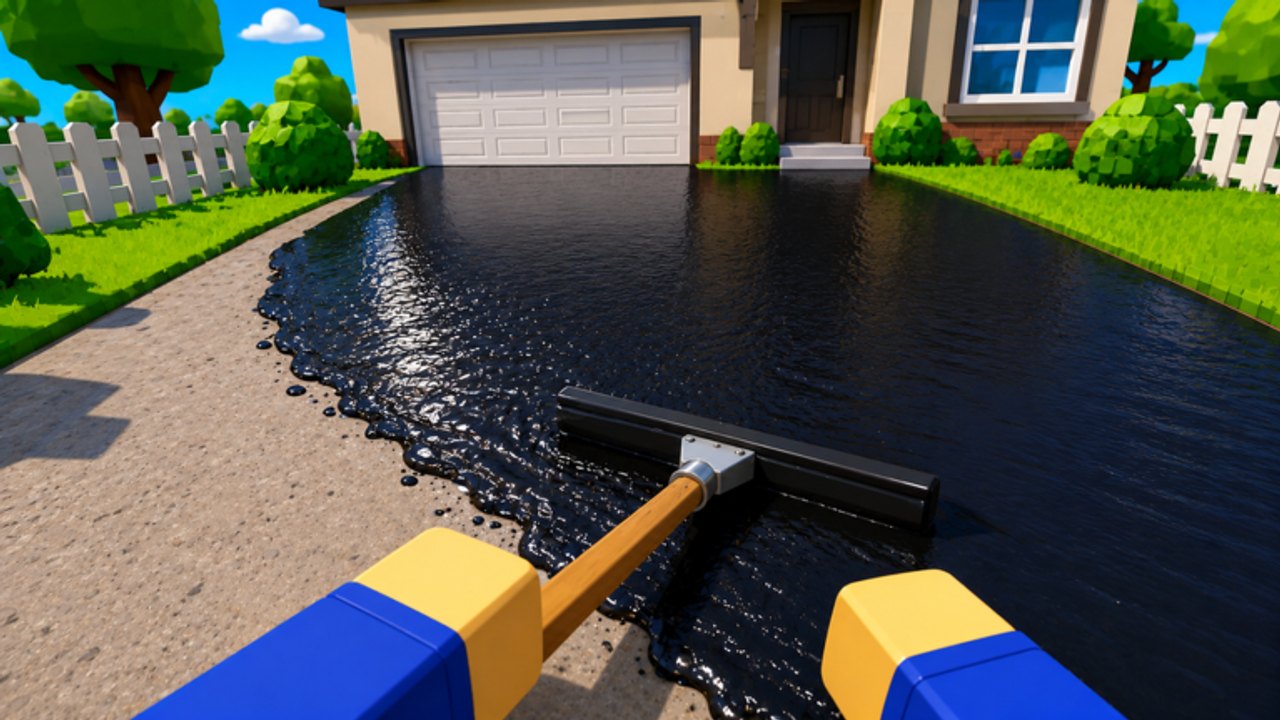
Seal A Driveway pays for real coverage, not for looking busy. Missed patches stay visible. A driveway that photographs as perfect can still sit at 85 percent on the job meter. This page is the technique guide: coverage math, tiny-pour long-push, refill timing, second coats, and edges. For the first-hour shop plan, use Getting Started. For inputs, use controls.
The method below matches what showed up in public play, including Koopekool’s long neighbourhood run. Watch that session in the embed, then copy the habits, not the truck envy.
Coverage math: 85 percent is not done
The payout is a coverage check. Shiny asphalt in the middle of the lot does not cancel grey corners, thin halos along the street, or a dry strip by the garage. If the meter hangs in the 80s, you are not unlucky — you left patches. Walk the perimeter before you cash out. Crouch the camera if you need to. The game is built so missed work shows.
Think in two numbers. First coat: get a continuous film across the slab, even if some areas look light. That often lands you around the mid-80s if you rushed. Second coat: hit the light areas and edges until the meter climbs to 98–100 percent. Stopping at “it looks black from spawn” is how crews donate time to an unfinished job.
Tiny pour, long push
Pour a tiny amount, then push it as far as the bead will travel. A heavy dump sits in a thick tongue, skins over, and never reaches the far edge. You waste bucket volume and create ridges that hide dry asphalt underneath. Short pours stretch. Long pours puddle.
Work in overlapping lanes. Start at the high side or the house wall so you are not walking through wet sealer to escape. Each pass should kiss the previous pass. If you see a zipper of uncoated stone between lanes, you poured too little on the overlap, not too little in the middle. Fix the zipper with a light extra bead, not a new flood.
Squeegee length is the upgrade that makes this honest. A longer blade covers more width per pull, which means fewer zippers. Capacity around 164 L showed up in that long public run as a mid-game bucket — useful context, not a number you must grind before you learn the stroke. Rank those buys on upgrades after the technique sticks.
Refill is part of the stroke
When the pour thins, refill. Dragging a dry blade polishes grey asphalt and fools your eye. Build a rhythm: pour, push, glance at the pail, refill, next lane. Pour speed and refill speed upgrades shorten the downtime; they do not replace the glance. Controls maps the refill action on PC and mobile so you stop spinning the camera looking for a prompt.
If you bought the Bantam Dart and the truck squeegee attachment, the same rule holds. A truck that runs dry still paints missed patches, just faster. Cyber Seal is a quicker Cybertruck-like sealer — good for bulk film, still capable of leaving edges if you never hop off to finish. Truck order lives on the trucks list.
Second coat and stubborn corners
A second coat is how 85 becomes 100. You are not “wasting sealer.” You are buying the last 15 percent the meter actually pays. Focus the second coat on:
- Street lip and gutter line
- Garage apron and door corners
- Mailbox, lamp, or walkway notches
- Any patch that still photographs grey when you change camera height
Do not recoat the whole lot if the middle is already saturated. Spot-pour, short-push, inspect. If the meter still refuses 100, you missed an edge, not a gallon in the centre.
Edges are where paychecks die
Most unfinished jobs fail at the border. Keep a small bead in front of the blade as you trace the perimeter. Do not fling sealer onto grass or the house wall if you can help it, but do not leave a dry halo to stay “clean.” Overlap the edge pass with the last field lane so you do not create a new zipper.
On foot, walk the edge slowly. On a long squeegee, the blade can skip a notch you never saw from the cab. Hop off. Finish the notch. Get back on. That extra twenty seconds is cheaper than a 92 percent payout.
After the lot is black
Cash the 100 percent job, refill, and move. Do not Rebirth because one driveway went well — wait until the neighbourhood is done, then read Rebirth. Spend the cheque on capacity and length before walk speed; money has the shop order. Estate District and Megamart lots are larger stages for the same stroke, not a new physics set — see districts.
Quests still want coverage. Check quests and leaderboards under Players after you can hit 100 on demand. Daily gifts sit on daily rewards; promo Codes are unconfirmed, so learn how to redeem for later. Automation cannot invent coverage — if you look at Scripts or auto farm, read script safety first. The Tier List is for spend. This page is for the squeegee. If the meter says 85, the lot is not done.
Frequently Asked Questions
Quick answers for Seal A Driveway jobs, rebirth, and trucks.
Why am I stuck at about 85 percent?
The coat looks finished from one angle and still has missed patches. Walk edges, refill, and add a second coat. Getting Started covers why you should not cash out early.
Should I pour a lot of sealer at once?
No. Pour a tiny bit and push it far. Heavy dumps ridge up and hide dry asphalt. Controls helps you keep pour taps short on mobile.
Is a second coat required?
If the meter is not at 100 percent, yes. Second coats on corners and lips are how you collect the last of the pay.
Does a longer squeegee replace edge work?
No. Length cuts field time. Notches still need a hop-off pass. Upgrade length via upgrades, then finish edges on foot.
Can Cyber Seal finish a lot alone?
Where should I watch the technique?
The video on this page is Koopekool's neighbourhood run. Copy tiny pours, refills, and the second coat — not an instant Rebirth.